Stannous fluoride and sodium fluoride both prevent cavities, but they’re not interchangeable. Stannous fluoride is the only fluoride compound with FDA recognition for reducing gingivitis, plaque, and tooth sensitivity. Sodium fluoride is the simpler, more stable workhorse used in most standard cavity-prevention toothpastes.
If you have bleeding gums, sensitivity, or chronic bad breath, stannous fluoride is the version you should seek out.
I’ve been a dentist for 16+ years. The question I get more often than almost any other on fluoride is, “What’s the difference?”
Most patients don’t realize there even is one. The label just says “fluoride.”
So let me give you the short answer first, and then the longer one if you want it.
The short version:
- Sodium fluoride (NaF) strengthens enamel and prevents cavities. That’s it.
- Stannous fluoride (SnF₂) strengthens enamel, prevents cavities, plus kills the bacteria that cause gum disease, reduces tooth sensitivity, and neutralizes bad-breath compounds.
If you have healthy gums, no sensitivity, and no halitosis, sodium fluoride is fine. If any of those three are happening, stannous fluoride is the upgrade that addresses the cause, not the symptom.
What both compounds have in common

Both stannous and sodium fluoride deliver the fluoride ion that reinforces enamel by forming fluorapatite, a more acid-resistant version of the calcium phosphate your teeth are built from.
The FDA approves both forms for daily use, and clinical trials on each compound stretch back several decades. As far as cavity prevention goes, both are evidence-backed at standard over-the-counter concentrations (1,000-1,500 ppm).
That’s where the overlap ends.
Where stannous fluoride pulls ahead
The “stannous” part means tin. The tin ion does additional work beyond what fluoride alone can do.
It’s antimicrobial. The tin ion disrupts the metabolism of the anaerobic bacteria responsible for plaque, gingivitis, and the sulfur compounds that cause bad breath. Sodium fluoride has no antimicrobial activity. None.
It plugs dentin tubules. The microscopic channels that connect your tooth’s outer enamel to the nerve inside become exposed when gums recede or enamel wears thin. Stannous fluoride deposits a tin-containing layer that blocks those channels, which is why it’s the most reliable over-the-counter ingredient for tooth sensitivity.
It disrupts biofilm. Plaque is essentially a bacterial city wall, and stannous fluoride is one of the few over-the-counter ingredients that breaks down the matrix holding it together.
Key takeaways:
- Stannous fluoride does four jobs at once; sodium fluoride does one
- The antimicrobial activity is the main reason it works for gum issues and bad breath
When is sodium fluoride enough
For a healthy adult with no gum issues, no sensitivity, and no chronic bad breath, sodium fluoride toothpaste from a basic brand like Colgate Cavity Protection or Crest Regular gets the job done.
The cavity-prevention research is robust, the formulations are stable and inexpensive, and there’s no clinical reason to spend more on a stannous formula.
Kids in particular often do well on sodium fluoride pastes. The stannous formulations can have a stronger taste that some kids reject, and standard cavity prevention is usually the main concern at that age.
When stannous fluoride is the right call
There are four scenarios where I shift patients to stannous fluoride:
Bleeding or inflamed gums. Stannous fluoride has the strongest clinical evidence of any over-the-counter active ingredient for reducing gingival inflammation. The full protocol for the best toothpaste for gum disease leans heavily on stannous as the foundational change.
Tooth sensitivity. The tin ion plugs open dentin tubules through a different mechanism than potassium nitrate, the active ingredient in classic Sensodyne. Patients who haven’t found relief from potassium nitrate alone often respond to stannous fluoride within two to three weeks.
Chronic bad breath. Stannous fluoride reduces the anaerobic bacteria producing volatile sulfur compounds (VSC). Combined with zinc, it’s one of the most effective combinations for halitosis.
Recommended reading: Best Toothpaste for Bad Breath
High plaque or calculus buildup. Patients who form plaque quickly between cleanings benefit from the antimicrobial and biofilm-disrupting properties stannous fluoride brings to the table.
Key Differences at a Glance
| Feature | Stannous Fluoride (SnF2) | Sodium Fluoride (NaF) |
|---|---|---|
| Cavity Prevention | Excellent | Excellent |
| Antimicrobial | Yes (kills bacteria that cause plaque/gingivitis) | No |
| Sensitivity Relief | Yes (blocks open dentinal tubules) | No |
| Enamel Protection | Highly resistant to acid erosion | Protects against decay |
| Potential Side Effect | Can cause temporary staining on teeth | No risk of staining |
| Most Common In | Therapeutic toothpastes (e.g., Crest Pro-Health) | Most toothpastes, tap water, mouthwashes |
The staining concern (and why it’s mostly outdated)
Older stannous fluoride formulations had a real downside: they caused brown extrinsic staining on teeth and tongue.
This is why a lot of dentists my age were trained to default-recommend sodium fluoride. The reputation has stuck around longer than the actual problem.
Modern stabilized stannous fluoride formulations have largely solved the staining issue.
Stabilizers like sodium hexametaphosphate and zinc lactate keep the tin ion active without the staining tendency that the older formulations had.
Current-generation products like Crest Pro-Health and Sensodyne Pronamel Gum Health are the ones I recommend when stannous is indicated.
If you do notice surface staining over time, a routine professional cleaning removes it without any difficulty. The staining is extrinsic, sitting on the enamel surface rather than embedded in the tooth structure.
What about fluoride-free alternatives?
Patients ask me about nano-hydroxyapatite toothpastes and other fluoride-free options constantly. My position on nHAp has shifted over the last few years, and I want to be transparent about that.
I no longer recommend nano-hydroxyapatite toothpastes.
The reason isn’t safety.
The reason is that most brands using nHAp don’t disclose their particle size distribution, don’t publish third-party stability data, and don’t independently verify their concentration claims.
The clinical evidence for nHAp at 10% concentration with particles in the 20-50 nanometer range looks promising, but very few products on the market meet that specification or prove that they do.
For high cavity-risk patients, stopping fluoride toothpaste creates a measurable risk that no current fluoride-free alternative reliably matches.
Fluoride remains the standard with the strongest evidence, and either stannous or sodium fluoride is preferable to most of the “natural” alternatives currently on the shelf.
What I personally use
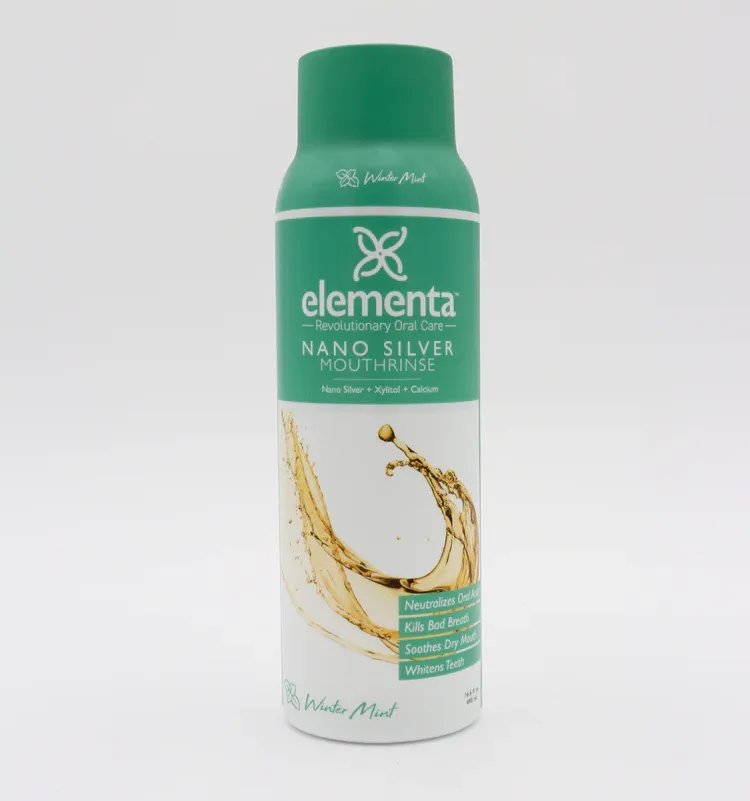
The toothpaste I use daily is Elementa Silver. I have a partnership with them, and I want to be clear about that. But I wouldn’t stand behind a brand if I didn’t have a good reason to.
Elementa Silver doesn’t contain stannous or sodium fluoride.
For my own routine, low-cavity risk, and healthy gums, the microbiome-aware approach (nano silver, xylitol, alkaline pH, bioavailable calcium) aligns with my philosophy of supporting bacterial balance rather than starting from scratch every morning.
For higher-risk patients, kids in active caries protocols, or anyone with diagnosed periodontal disease, a stannous fluoride toothpaste is the evidence-backed option I point to.
Code JOYCE20 if you want to try Elementa.
These two approaches can coexist comfortably. Stannous fluoride during periods of active gum management, and a microbiome-aware paste like Elementa for long-term maintenance once your gums have settled.
FAQ
Is stannous fluoride better than sodium fluoride?
Stannous fluoride is better than sodium fluoride for patients with gum disease, tooth sensitivity, chronic bad breath, or high plaque buildup. Both compounds prevent cavities effectively, but stannous fluoride is the only one with FDA recognition for reducing gingivitis and gingival inflammation. For patients without those concerns, sodium fluoride is a perfectly reasonable choice.
Does stannous fluoride stain teeth?
Older stannous fluoride formulations could cause brown extrinsic staining, but modern stabilized versions using sodium hexametaphosphate and similar stabilizers have largely resolved this issue. Any surface staining that does occur is easily removed during a routine dental cleaning and is fundamentally different from the deeper intrinsic discoloration caused by certain medications or dental injuries.
Which fluoride is best for sensitive teeth?
Stannous fluoride is the best fluoride for tooth sensitivity because the tin ion plugs the open dentin tubules that allow cold, hot, and sweet stimuli to reach the nerve. It works through a different mechanism than potassium nitrate (the active ingredient in classic Sensodyne), and many patients who haven’t found relief from potassium nitrate respond to stannous fluoride within two to three weeks of consistent twice-daily use.
Is sodium fluoride enough for cavity prevention?
Sodium fluoride is sufficient for cavity prevention in most adults with healthy gums, low to moderate cavity risk, and no sensitivity concerns. The clinical evidence for sodium fluoride and cavity prevention is robust and unambiguous. For higher cavity-risk patients, a prescription-strength 5,000 ppm sodium fluoride paste may be appropriate under your dentist’s direction.
What does stannous fluoride do that sodium fluoride doesn’t?
Stannous fluoride provides antimicrobial action against the bacteria responsible for plaque and gingivitis, plugs dentin tubules to reduce tooth sensitivity, and neutralizes the volatile sulfur compounds that cause bad breath. Sodium fluoride does none of those things. Both compounds strengthen enamel and reduce cavity risk through the same fluorapatite-forming mechanism.
Can I use stannous and sodium fluoride together?
You typically wouldn’t need both, since each provides cavity prevention, and stannous offers the broader spectrum of benefits. Some dental protocols pair a prescription-strength 5,000 ppm sodium fluoride paste at night with a stannous fluoride paste in the morning for very high cavity-risk patients, but this should be coordinated with your dentist rather than self-prescribed.
What are the negatives of stannous fluoride?
Stannous fluoride can cause tooth staining, a metallic aftertaste, and mild gum irritation in some people. It’s an effective antibacterial form of fluoride that’s been studied since the 1950s, and it does real work against gingivitis and sensitivity. The tradeoffs are worth knowing before you commit to it daily.
The most common complaint I hear from patients is extrinsic staining, usually showing up along the gumline and between teeth. Modern stabilized formulations have improved this a lot, but if you have veneers, composite bonding, or are prone to surface staining, it can still show up.
What do the Japanese use instead of fluoride?
Many Japanese toothpastes use nano-hydroxyapatite (nHAp) as the primary remineralizing ingredient instead of fluoride. Hydroxyapatite was originally developed by NASA in the 1970s to help astronauts rebuild bone and tooth mineral loss in zero gravity, then licensed to Sangi Co. in Japan. Apagard launched in 1980, and Japan’s Ministry of Health approved nHAp as an anti-cavity agent in 1993.
A quick clarification, because this gets misrepresented online a lot: fluoride is still widely available and used in Japan. Japan just has a longer consumer history with hydroxyapatite-based options than the US does.
What toothpaste do dentists not recommend?
Most dentists steer patients away from charcoal toothpastes, highly abrasive whitening pastes (RDA above 200), and SLS-heavy formulas if you’re prone to canker sores. These are the categories that come up most often in my chair.
Charcoal toothpaste is the biggest one. A 2017 review in the British Dental Journal found insufficient evidence to support the cleaning and whitening claims, plus concerns about abrasivity wearing down enamel over time. High-abrasion whitening pastes can chip away at enamel with daily use; the ADA cap is 250 RDA, but anything north of 200 is worth being cautious about, especially if you brush with pressure. Sodium lauryl sulfate (SLS), the foaming agent in many conventional toothpastes, has been linked to recurrent aphthous ulcers in susceptible patients.
The other category I’d add isn’t about ingredients, it’s about transparency. Any toothpaste built around one trending ingredient with no published third-party testing or particle data is one I’d skip. If a brand can’t tell you the size of their hydroxyapatite particles or where their ingredients are sourced, that’s a flag.
Is there a fluoride-free option that works as well?
There is no fluoride-free toothpaste with clinical evidence comparable to stannous or sodium fluoride for cavity prevention or gingivitis reduction. Nano-hydroxyapatite is biologically plausible and shows promise in laboratory studies at the right particle size and concentration, but most over-the-counter nHAp toothpastes do not disclose those parameters, which makes meaningful comparison to fluoride impossible at this point.
About the Author
Dr. Joyce Kahng is a cosmetic dentist and the founder of Orange & Magnolia Dental Studio in Costa Mesa, CA. With 16+ years in practice and 1.5M+ followers across Instagram, TikTok, and YouTube, she’s known for making dental advice make sense without the jargon or fear. She’s been featured in Forbes, Vogue, The New York Times, and Allure, and is the creator of the VeneerLIFT. When she’s not in the clinic, she’s somewhere on the internet demystifying smiles.